
African Plant Nutrition Scholarships

In 2025, ten students enrolled in advanced science programs were selected for the African Plant Nutrition Scholar Award. Each student received $2,000. This post graduate award strives to encourage the brightest minds focused on the continued advancement crop nutrition and soil health in Africa. Since its establishment in 2020, this initiative has distributed $120,000 to 60 graduate students across the continent.
This scholarship is supported through APNI’s continued and valued partnership with Mohammed VI Polytechnic University (UM6P) and OCP Group (OCP S.A.). This initiative strives to encourage the brightest minds to focus on the critical target of continued advancement of the science of crop nutrition across Africa. Applications undergo a rigorous process via the selection committee who consider the full spectrum of academic and personal achievements for each potential recipient. This year’s recipients are:
BENIN
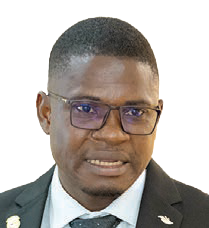
Mr. Awouminassi Marcellin ATAKOUN (Doctorate Program) Kwame Nkrumah University of Science and Technology (KNUST)
AREA OF STUDY: Cattle corralling for improved soil fertility, maize production and for climate change resilience in the Sudano-Savanna area
Mr. ATAKOUN’s is examining cattle corralling for improved soil fertility, maize production and for climate change resilience in the Sudano-Savanna area of Benin, West Africa. Cattle corralling is a traditional soil management practice that can contribute to long-term soil carbon sequestration and nutrient enrichment. The study evaluates soil physical and chemical properties and examines maize productivity under current and projected climate conditions using crop simulation models. The objective is to provide a scientific basis for integrating traditional crop-livestock practices into sustainable land use strategies that enhance soil health and resilience to climate variability. The expected impact is to inform climate-smart agricultural policies and promote low-emission farming systems in sub-Saharan Africa.
Awouminassi’s future career goal is to become a leading researcher and policy advisor in climate-smart agriculture and sustainable land management across Africa. He aspires to work with international research institutes and regional stakeholders to design, implement, and scale up land use interventions that address both environmental sustainability and food security. He also plans to contribute to academic capacity-building through teaching and mentorship in African universities, while actively engaging in science-policy dialogues to ensure that research outcomes are translated into impactful development actions.
CÔTE D’IVOIRE

Ms. Logbochi Marie Elisabeth ASSOH (Doctorate Program) Félix Houphouët-Boigny University
AREA OF STUDY: Optimizing cassava yield and improving its nutritional quality through rational fertilization methods in the forest and pre-forest agroecological zones
Ms. ASSOH is researching the optimization of cassava yield and improving its nutritional quality through rational fertilization methods in the forest and pre-forest agroecological zones of Côte d’Ivoire. Her work aims to defne fertilization strategies that can simultaneously enhance agro-nutritional performance, economic proftability, and environmental sustainability of cassava cultivation, based on soil characteristics in the targeted agroecological zones. This research is carried out at the National Center for Agronomic Research (CNRA) in Bouaké, Côte d’Ivoire, and focuses on seven localities selected for their importance in cassava production and their specifc agroecological profles. The main benefciaries of this research are cassava farmers, who will receive practical recommendations to increase yield and proftability. Researchers and agricultural institutions will also beneft from new scientifc insights to refne cassava fertilization strategies. Moreover, companies involved in fertilizer production and distribution may use these fndings to develop more suitable formulas aligned with local needs.
She aspires to pursue a career in tropical agronomic research, focusing on the development of sustainable fertilization strategies that contribute to enhancing the nutritional value of staple crops in Africa. Her goal is to contribute meaningfully to the improvement of agricultural systems and food security for vulnerable populations.
ETHIOPIA
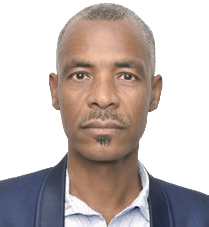
Mr. Gebremedhin Chameno CHALITE (Doctorate Program) Hawassa University
AREA OF STUDY: Unlocking socioecological benefits and indigenous management of agroforestry systems in the Gofa zone of northern Ethiopia
Mr. CHALITE is seeking a better understanding of the influence of indigenous management on plant functional diversity and soil health, including tree-crop interactions. This research has significant expected impact and relevance at local, national, and potentially international levels. It will validate and give recognition to local farmers’ knowledge; provide scientifc backing for traditional practices and identify areas for improvement; promote practices that combat land degradation, improve soil fertility; fll critical knowledge gaps regarding the socioecological functions of indigenous agroforestry in specifc Ethiopian contexts.
Gebremedhin’s immediate plan is to contribute to academic discourse and pursue postdoctoral research. His future career plan focuses on sustainable land management, agroforestry and community-based natural resource management in developing countries like Ethiopia, contributing to sustainable development and environmental conservation.
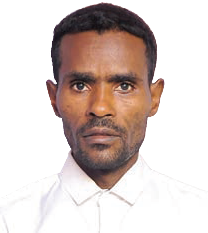
Mr. Gemechu Berhanu GERMESSA (Doctorate Program) Haramaya University
AREA OF STUDY: Productivity of maize and selected soil physical and chemical properties as infuenced by application of mineral fertilizers and organic sources under changing climate in west Oromia
Mr. GERMESSA is focused on the evaluation of the efect of integrated climate smart agricultural soil amendment approaches on soil properties, yield, and nutrient use efciency of maize under changing climate in western Ethiopia. He is assessing how better understanding of farmer practices and spatial variability of key soil properties can help estimate the optimum rate of organic and inorganic fertilizer sources and lime to restore soil health and boost maize yield under changing climate in acidic soils. His research will also use DSSAT crop modelling to simulate maize performance under current and future climate scenarios. Field experimental data collected at three locations for two consecutive seasons will be used for model calibration and validation. This study provides practical information on improving soil health and boost maize yield, possibly improving the incomes of Ethiopian farmers. Moreover, this resilience-oriented strategy has the potential to strengthen Africa’s capacity to adapt, enhance food security, and align with sustainable development priorities.
Germessa looks forward to completing his doctorate degree and pursuing a career in higher education, focusing on teaching, research, and community service in my feld to make a meaningful contribution.
KENYA

Ms. Chebet ARUSEY (Doctorate Program) University of Eldoret
AREA OF STUDY: Fate of antibiotic residues and antibiotic-resistant bacteria in livestock manure and their effects on greenhouse gas emissions and nutrient cycling
Ms. ARUSEY is focused on the environmental fate of three commonly used veterinary antibiotics— Oxytetracycline, Enrofoxacin and Tylosin—in livestock manure, and how they afect greenhouse gas (GHG) emissions, microbial communities, and nutrient cycling. The study is structured around three key objectives: to evaluate how these antibiotic residues infuence emissions of methane, nitrous oxide, carbon dioxide, and ammonia, as well as their impact on the nutrient quality of manure as a fertilizer; to determine the degradation paterns of these antibiotics and assess their efects on bacterial community structure and functional genes involved in nitrogen and carbon transformations; to examine how antibiotic residues afect soil nutrient dynamics, particularly nitrogen and phosphorus cycling, when manure is applied to soils. The research involves controlled incubations, microcosm studies, and feld-scale experiments for sustainable manure management. It integrates GHG measurements, shotgun sequencing, manure and soil analysis, and LC-MS/MS residue detection to examine how antibiotics infuence microbial activity and nutrient dynamics. The outcomes inform policy on safe manure use, support nutrient circularity, reduce GHG emissions, and improve the sustainability of integrated crop-livestock farming systems.
Chebet aspires to advance sustainable soil fertility and climate-smart agriculture through research on nutrient cycling, manure management, and microbial interactions. Her goals include improving fertilizer efficiency, influencing policy, mentoring young scientists, and promoting practices that enhance soil health, reduce emissions and antimicrobial resistance, and support resilient, sustainable food production systems.
MOROCCO
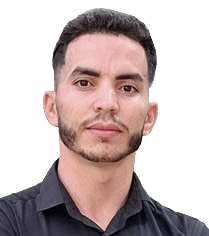
Mr. Mbarek EL-GUIRAH (Doctorate Program) African Sustainable Agriculture Research Institute (ASARI) – Mohammed VI Polytechnic University (UM6P)
AREA OF STUDY: Adaptation of alternative forage crops to salinity and drought stresses in desert conditions of southern Morocco
Mr. EL-GUIRAH is evaluating how alternative forage crops respond to saline and drought conditions prevalent in marginal lands of the Moroccan desert regions, with a special emphasis on identifying crops and practices that can sustainably improve soil fertility while enhancing crop productivity. By exploring tolerant crops, best agricultural management practices, the research is expected to signifcantly sustain farmer’s productivity and proftability, thus supporting sustainable agriculture in Morocco’s desertic areas. The research fndings could potentially ofer viable solutions for managing limited water resources and saline soils, thereby increasing agricultural resilience to challenging conditions.
His career goal is to become an agricultural researcher and consultant specializing in climate-smart agriculture practices. Mbarek aims to contribute to developing practical solutions and advising farming communities on improving crop productivity, enhancing soil health, and adapting agricultural practices to increasingly challenging environmental conditions. Through collaborative research, outreach, and implementation of innovative agricultural techniques, he is willing to make tangible contributions to improving livelihoods and environmental sustainability in regions affected by climate change.
SOUTH AFRICA
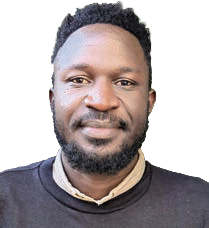
Mr. Conrad Wabwire ADDIKAH (Doctorate Program) University of Pretoria
AREA OF STUDY: Exploring the current and future potential of cassava cultivation
Mr. ADDIKAH is exploring the current and future potential of cassava cultivation in South Africa. Conrad aims to assess the viability of cassava as a resilient crop in the face of climate change. His research will map and synthesise literature on cassava production and utilisation trends, challenges, and opportunities in Southern Africa. Through feld trials, Conrad will evaluate the adaptability and performance of various cassava genotypes by analysing genotype and genotype-by-environment interactions. He will also apply the EcoCrop model using CMIP5 and CMIP6 climate projections to assess cassava’s current and future suitability across South Africa. Additionally, water use efciency trials will be conducted on select drought-tolerant, high-yielding genotypes. Two crop models, APSIM-Cassava and DSSAT-CSM MANIHOT, will be calibrated and validated with feld data to simulate cassava growth and predict yields under climate scenarios. These tools will also guide the development of climate-smart adaptation strategies. Expected outcomes include identifying stable, high-performing genotypes; developing cassava suitability maps; improving understanding of cassava’s water use, and delivering robust, locally adapted crop models. The research will generate practical insights for farmers, policymakers, and breeders to integrate cassava production into South Africa’s food systems sustainably.
Upon completing his Ph.D., Conrad plans to pursue a research and teaching career in agronomy, with a focus on climate resilience. He aims to share his expertise through university teaching and targeted training for research institutions, while contributing to global scientifc knowledge through impactful publications.
UGANDA

Mr. Donald KAYUZA (Master’s Program) Makerere University
AREA OF STUDY: Effects of lime, biochar, and catle manure on soil physicochemical properties, yield, and nutrient use efficiencies of lowland rice
Mr. KAYUZA is researching rain-fed lowland rice systems practiced by smallholder farmers in Africa. These rice production systems have a high yield potential, but the actual rice yield is currently low. This is mainly due to declining soil fertility, iron toxicity, and inefcient nutrient utilization. Additionally, alternating wet and dry conditions ofen shif soil pH and restrict nutrient availability for rice plants. The objective of this study is to increase rice productivity under rain-fed conditions by applying lime and biochar. Specifcally, this study evaluates the efects of these treatments on rice yield, nutrient use efciency, iron uptake, and changes in soil physicochemical properties. The study is conducted in two agroecological zones in Uganda, where catle manure is used as a locally available nutrient source for integrated soil fertility management. The scope of this study includes both soil and plant responses under rain-fed conditions. The focus is on improving nutrient availability, uptake, and use efciency in the production of rice. This study is expected to develop cost-efective soil fertility strategies that enhance soil health, support sustainable rice production, and reduce nutrient losses to the environment. These improvements contribute to long-term food security and more resilient farming systems in the region.
Donald aims to become a researcher in the feld of soil fertility and sustainable agriculture. He is commited to supporting smallholder farmers through science-based innovations that improve crop productivity and soil management in Sub-Saharan Africa.
GHANA
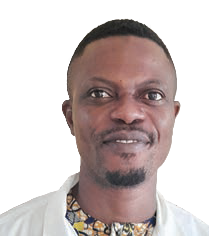
Mr. Emmanuel BAIDOO (Doctorate Program) Kwame Nkrumah University of Science and Technology
AREA OF STUDY: Soil carbon sequestration, nutrient characteristics, and greenhouse gas emissions in african dark earths
Mr. BAIDOO is building a resilient agroecosystem in Ghana by improving soil fertility and yield. The objectives driving this research will focus on: 1) quantifying soil nutrient characteristics and grain yield of the African Dark Earth (AfDE) and non-Dark Earths cultivated lands in Ghana; and 2) estimating the carbon footprint of the AfDEs via measurements of greenhouse gas under diferent fertilizer regimes and establish how they contribute to climate change mitigation. This will be studied across nine diferent agroecosystems in Ghana. This research will help contribute to knowledge on indigenous innovations of the AfDE as a scientifc tool for building climate-smart and resilient agro-ecosystems in Ghana and sub-Saharan Africa. Climatic, socioeconomic, and soil factors impacting carbon footprint and crop yield in AfDE will be established as a pathway to an alternative nature-based solution to food security problems in SSA and Africa. More so, a pathway will be developed towards integrating such indigenous eforts with mineral plant nutrition.
Emmanuel aspires to contribute to building food security, climate resilience, and environmental sustainability across Africa and at the global level as researcher and scientist. He is interested in training earlier career scientists and students in data processing, data analysis, interpretation and bridging the wide gap between the researcher and farmers in Ghana and Africa through seminars and conferences. In the short-term, he wants to develop a useful scientific tool and model for reducing GHG emissions in agricultural land uses with regards to fertilizer application in Ghana.

Ms. Nancy Korkor TETTEH (Master’s Program) University of Ghana
AREA OF STUDY: Carbon fractions in soils of agroforestry and monoculture cocoa cropping systems in the semi-deciduous and moist evergreen zones of Ghana
Ms. TETTEH is focused on quantifying and characterizing soil organic carbon fractions to: 1) determine the changes in labile and non-labile carbon fractions of soils (Acrisols) in the Western-north region of Ghana, resulting from diferences in cocoa cropping system (agroforestry and monoculture) and agroecological zones (Semi-Deciduous and Moist Evergreen zones), and; 2) compare dissolved organic carbon, soil microbial biomass carbon, particulate organic carbon, and the potassium oxidizable carbon methods of quantifying soil labile carbon pools. This study is expected to contribute signifcantly to sustainable land management by informing practices that enhance carbon sequestration and soil fertility in tropical agricultural systems.
Looking ahead, Nancy is interested in becoming a leading soil scientist and researcher dedicated to sustainable agriculture, soil carbon management, and climate-smart practices in Sub-Saharan Africa. She intends to pursue a Ph.D. and contribute to evidence-based policy formulation, farmer education, and capacity building. Through research, outreach and collaboration, Nancy aspires to help bridge the gap between science and practice, ensuring improved soil health, food security, and resilience of agricultural systems to climate change.
African Phosphorus Fellowship

This initiative strives to encourage scientific programs directed towards improving our understanding of more efficient and effective phosphorus (P) management in African agro ecosystems. In 2025, five researchers each received awards of $5,000.
NIGERIA
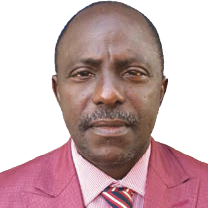
Dr. Adebayo OLOWOAKE (Professor)Kwara State University
PROJECT: Growth dynamics of cowpea cultivars as influenced by source, rate, and time of phosphorus fertilizer application
Dr. Olowoake’s study is expected to determine preferred phosphorus (P) fertilizer sources for optimal growth performance of cowpea cultivars. It will reveal how diferent sources afect root development, shoot biomass, and nodulation. Results will clarify how early, split, or late application of P infuence early establishment, fowering, and pod formation in cowpea. Diferent cowpea cultivars may respond differently to the source, rate, and timing of P and the study is expected to reveal interactions between cultivar and fertilizer variables.
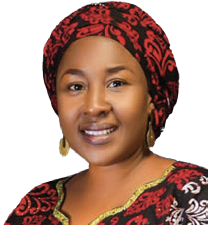
Dr. Rejoice Ibrahim SOLOMON (Senior Lecturer) Modibbo Adama University of Technology
PROJECT: Assessment of biomass and phosphorus synergies for maize production and soil carbon enhancement
Dr. Solomon aims to determine how biomass amendments afect soil phosphorus (P) availability, and what benefts come from combining diferent types of biomasses with P fertilizers including maize growth, yield, soil carbon content, and whether biomass-based amendments can improve the resilience of maize production systems. The work will help our understanding of the long-term efects of biomass + P combinations on soil health, including microbial abundance and organic mater content. Rejoice is also interested in the socio-economic factors currently influencing maize farmers adoption of biomass-based soil amendments.
GHANA
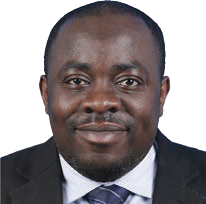
Dr. Ransford Opoku DARKO (Associate Professor) University of Cape Coast
PROJECT: Optimizing Phosphorus Use Efciency Through Irrigation Scheduling in High P-Fixing Soils Under Maize-Based Cropping Systems
Dr. Darko is studying optimal phosphorus (P) use efciency through improved irrigation scheduling in high P-fxing soils under maize-based cropping systems. The study will assess the efects of diferent irrigation schedules on soil moisture and P availability and evaluate the impact of irrigation timing and frequency on maize growth, yield, and P uptake.
CAMEROON

Dr. Marie Noela Enyoe OLOUGOU (Post-doctoral Fellow) University of Buea
PROJECT: Harnessing the potential of indigenous phosphate-solubilizing microorganisms for sustainable phosphorus management in Cameroon
Dr. Oloougou’s research is aimed at improving phosphorus (P) availability and soybean grain yield. She will be determining the distribution and bioavailability of diferent P fractions in soils under soybean cultivation, focusing on their dynamics and implications for precision P fertilization. She plans to isolate, identify, and characterize indigenous phosphate-solubilizing microorganisms (PSMs) adapted to local soil conditions and evaluate their potential role in improving P availability in high P-fxing soils. She is interested in evaluating the synergistic effects of native PSMs combined with organic and inorganic P sources on P mobilization, soil fertility and health, soybean nodulation, and yield.
ETHIOPIA
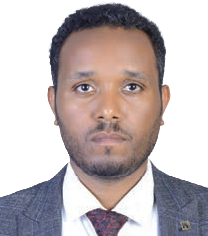
Dr. Ashenaf Woldeselassie TESHALE (Assistant Professor) Wolaita Sodo University
PROJECT: Effect of nutrient-enriched biochar and irrigation levels on potato yield, phosphorus use efficiency and soil health in Wolaita Sodo, Ethiopia
Dr. Teshale’s research aims to evaluate the combined efects of nutrient-enriched biochar and varying irrigation levels on potato productivity, phosphorus (P) use efciency, and soil health in Wolaita Sodo, Ethiopia, where acidic soils and water scarcity limit crop yields. By addressing P-fxation and moisture stress through biochar application and regulated irrigation, the research seeks to enhance P availability for improved potato growth. The ultimate goal is to develop sustainable, cost-efective practices for smallholder farmers, ofering practical solutions for improving P use efciency and enhance the resilience of smallholder farmers under the changing climate.
African Plant Nutrition Outreach Fellowship

This award acknowledges innovation in education, training and communication programs relevant to improving the use and efciency of plant nutrients in African agro ecosystems. In 2025, two scientists each received awards of $5,000.
ETHIOPIA
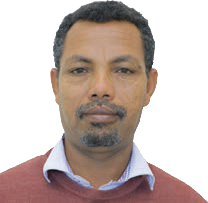
Dr. Birhanu AGUMAS (Senior Researcher in System Agronomy) Amhara Agricultural Research Institute
PROJECT: Enhancing nutrient use efficiency and crop yield through data driven decision support tools (DST) outreach, research, and capacity building
Dr. Agumas is working towards strengthened outreach and capacity building for extension agents and district-level agricultural extensionists and promote the dissemination and adoption of 4R-based solutions to address soil fertility decline and enhance agricultural productivity in Ethiopia. He will validate and pilot site-specifc fertilizer management tools through the application of data-driven decision support tools (DSTs) tailored to one of the major maize-growing districts. He is aiming at enhanced technical capacity and knowledge amongst key stakeholders—including farmers, extension personnel, and researchers—regarding the efective use of DSTs in the district’s agricultural extension.
ZIMBABWE

Dr. Blessing MAGONZIWA (Lecturer) University of Zimbabwe
PROJECT: Community-based capacity building in soil nutrient analysis and management: A 3-pronged approach
Dr. Magonziwa is seeking to train extension ofcers on the use of in-feld Soil Tool Kit methods for soil analysis and give recommendations for improved soil health management. She will use infeld Soil Tool Kit Methods and a Mobile Lab and train farmers on the implications of the results based on their current practices. She wishes to increase engagement with farmers through face-to-face community dialogues on soil health and nutrient management. She also plans to create a virtual WhatsApp platform for the training and engagement of farmers, researchers, and extensionists on improved soil health and nutrient management practices.
Learn more about opportunities available from APNI’s EXCEL Africa Initiative at: htps://apni.net/ExcelAfrica